|
|
WRUF-FM
103.7
Gainesville
|
Original Call Letters: WRUF |
|
Originally Licensed: 1948 |
|
Original City of License: Gainesville |
|
Original Frequency: 104.5 |
|
Origin of Call Letters: Radio University of Florida |
|
Original Power: 27,500 watts |
|
Original Location: |
|
Original Format: Beautiful Music/Classical music |
|
|
Mutual Broadcasting System |
|
|
1948-Board of Regents for the University of Florida |
History of Call Letters and Formats: |
WRUF-1948-Simulcast of most WRUF-AM 850 programming |
| WRUF-1969-Beautiful Music/Classical/Educational "Stereo 104" | |
| WRUF-1982-AOR/Rock "Rock 104" | |
| WRUF-2001-Modern Active Rock/Alternative "Rock 104" | |
| WRUF-2010-Country "Country 103.7-The Gator" |
|
|
|
|
|
It's Official: Rock 104 Goes Country 10-11-10 Thanks to William Watson for the following info. The University of Florida's 100,000-watt commercial radio station, WRUF-FM 103.7 known today as "Rock 104" will become Gainesville's only country radio station beginning this weekend, officials from UF's College of Journalism and Communications announced today. Under its new name, "Country 103.7-The Gator", the station will broadcast country music to attract a broader audience and help ensure the economic viability of the media properties for decades to come, said Randy Wright, executive director of the college's multimedia properties. "Rock104" will live on as Rock104.com, continuing to target the 18-34 demographic with the active rock format the station has programmed plus local information and entertainment of value to North Central Florida. Source: University of Florida News Randy Wright, rwright@jou.ufl.edu, 352-392-5551 ext. 1114 |
|
Names In WRUF History |
|
| Don Smith-1950-1954-Board of Regents for the University of Florida | |
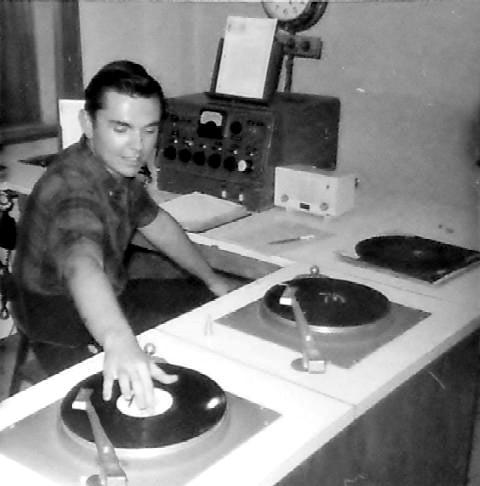 Dan Hogan-1965-1967-Host of "Golden Notes", an afternoon big band and classical music show-Board of Regents for the University of Florida Biography |
|
 Jim Philips-1967-1970-The Board of Trustees for The University of Florida Biography |
|
| Robert W. "Bob" Leach-1974 to 1986-General Manager-Board of Regents for the University of Florida | |
| Edison McIntyre-1975-1976-Board of Regents for the University of Florida | |
| Professor Chuck Woods-1979-Host of "Studio 104"-Board of Regents for the University of Florida | |
| Gregg Melton-1979-1980-Co-host of "Studio 104" Friday & Saturday-Board of Regents for the University of Florida | |
| Chris Evans-1979-1980-Co-host of "Studio 104" Friday & Saturday-Board of Regents for the University of Florida | |
|
|
|
| Robert Clark-1985-General Manager-Board of Regents for the University of Florida | |
| Howard Scott-1993-1996-Mid-day/Evening Request Show/Assistant Program Director-Board of Regents for the University of Florida | |
| Tony Tyler (Tony Simon)-1996-1998-Second to last host of the "Seventies At Seven" on Saturday mornings/Hosted other dayparts/1997-1998- Assistant Program Director-Board of Regents for the University of Florida | |
| Matt Adams-Mid-days/1997-Music Director-University of Florida | |
 Kaylan (Moody)-2018-2018-Marc Radio Gainesville, LLC |
|
| Harry Guscott-Program and Operations Manager-Board of Regents for the University of Florida | |
| Lex and Terry-(Syndicated Mornings from "Rock 105" WFYV Jacksonville)-University of Florida | |
| Todd Louis-Morning co-host-University of Florida | |
| Chad Cruz-Morning co-host-University of Florida | |
| Rick Miles-University of Florida | |
| D. Nail-University of Florida | |
| Grant Stone-University of Florida | |
| Dave Warren-University of Florida | |
| Duane F. McConnell-Chief Engineer-University of Florida | |
| Mike Killabrew-Music Director-University of Florida | |
| Jason Burns-Afternoons/Assistant Program Director-University of Florida | |
| Dan O'Malley-Assistant Program Director-University of Florida | |
| Chip Thomas-Assistant Program Director-University of Florida | |
| Curtis Jones | |
| Dan Vining | |
| Steve Street-University of Florida | |
 Kyle Devlin-10AM-Noon-University of Florida |
|
 Kristen-Noon-3PM-University of Florida |
 Jimmy D-3PM-7PM-University of Florida |
 Chris Coleman-7PM-11PM/3PM-7PM/Music Director-University of Florida |
| Ben Markus-Weekdays 10AM–Noon/Sat 2PM-6PM-University of Florida |
 Glen Richards-Weekdays Noon-3PM-University of Florida |
| Rich Stehli-Weekdays 7PM-11PM-University of Florida |
| Kyle Baldry-Asst. Program Director- University of Florida |
| Tom Krynski-News Director-University of Florida |
| Forrest Smith-Asst. News Director- University of Florida |
| Steve Russell-Sports Director- University of Florida |
| Larry Dankner-General Manager/General Sales Manager-University of Florida |
| Lawanna Duncan-Business Manager-University of Florida |
| Jake Wilkinson-Promotions Director-University of Florida |
| Rose Sierra-Account Executive-University of Florida |
| Tom Collett-Account Executive-University of Florida |
| Jack Wich-Music Director-University of Florida |
| B.J. Rust-Business Manager-University of Florida |
| Dee Washington-Accountant-University of Florida |
| Jon Ruhff-Creative Services Director-University of Florida |
| Mel Clark-Senior Account Executive-University of Florida |
| Brian Walker-Account Executive-University of Florida |
| Lauren Dukes-Account Executive-University of Florida |
| Cathy Ferguson-Traffic Manager-University of Florida |
| Dr. Sid Pactor-Board of Regents for the University of Florida |
 Dr. Mickie Edwardson-Board of Regents for the University of Florida In Memory |
| Biographies | In Memory | Sounds AM / FM |
Misc. | Chronology | What's News? |