|
|
|
Original Call Letters: WDBO |
|
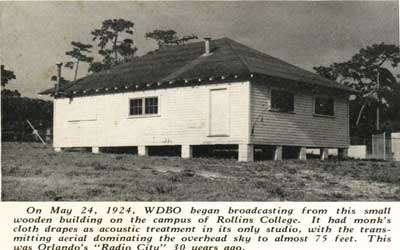
Originally Licensed: May 24, 1924 |
|
Original City of License: Winter Park (Rollins College) |
|
Original Frequency: 1250, moved to 1040 in 1927, moved to 620 in 1928, moved to 1120 in 1929 then to 580 in 1932 |
|
Origin of Call Letters: Slogan;
Way Down By Orlando |
|
Original Power: 50 Watts |
|
Translator(s): W297BB 107.3 Orlando |
| Original Location: Rollins College, Winter Park |
|
Original Format: Concert programming and college lectures |
|
|
|
| NBC Talknet | |
| ABC | |
| CNN | |
| NBC News Radio |
|
|
1924-Rollins College |
| 1926-Orlando Broadcasting Company, Inc. | |
| 1929-Central Florida Broadcasting Station, Inc. (563 N. Orange Ave., Orlando) | |
| 1957-Cherry Broadcasting Station of Providence, Rhode Island | |
| 1963-The Outlet Company ($6 million for WDBO-AM, FM and WDBO-TV) | |
| 1982-Katz Broadcasting (Purchased WDBO-AM 580/WDBO-FM 92.3 for $9.5 million) | |
| 1986-New City Communications (New City would purchase Katz in 1986) | |
| 1997-Cox Broadcasting (Cox acquires New city in 1997) |
|
WDBO-1924-Variety "Way Down By Orlando" |
| WDBO-1957-Pop | |
| WDBO-1985-News/talk ''News & Weather Leader'' | |
| WDBO-2012-ESPN Sports |
|
|
|
1925-A ship in the Pacific picks up WDBO's signal, making headlines all over the state of Florida. Meanwhile, WDBO is permitted to increase power to 100 watts. |
|
|
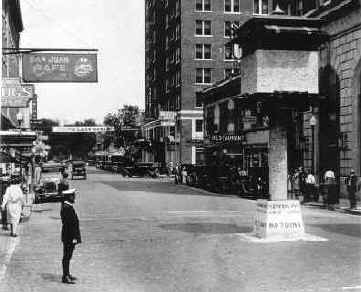 WDBO programming was broadcast from the traffic tower at the intersection of Central and Orange Aves in 1926. Traffic control towers served as a bridge between the times when Police officers directed traffic while standing in the roadway and when automatically controlled signals were installed. The "crow's nest" elevated the officer above traffic so he would have a clear view of traffic in all directions while he manipulated the colored lights. Broadcast time was increased to fifty hours per week. |
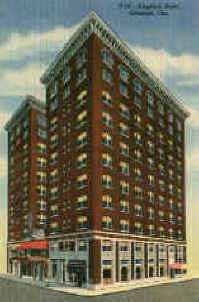
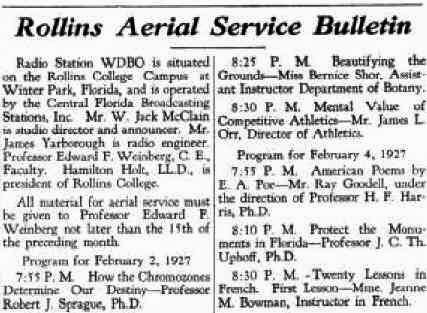 1927- The station was moved to the Newell Electric Company store located in The Robinson Building on Pine street, Orlando, prior to the move to the Fort Gatlin Hotel1927-The station began broadcasting from the "new" Fort Gatlin Hotel in Orlando. Programming featured groups, including The Beasley Band. Colonel Johnston's Orlando Broadcasting Co. takes full control of WDBO. The Federal Radio Commission authorizes WDBO to operate at 1040 kilocycles, with power of 1,000-watts daytime, 500-watts nighttime. |
 1928-WDBO officials asked the City of Orlando to buy the station, saying it would go off the air because Col. Johnston refused to comply with new rules set by the Federal Radio Commission. The City Council agreed to put the matter to a referendum, but the city's residents turned down the purchase. The FCC authorizes WDBO to switch operation from 1040 kilocycles to 620 kilocycles. |
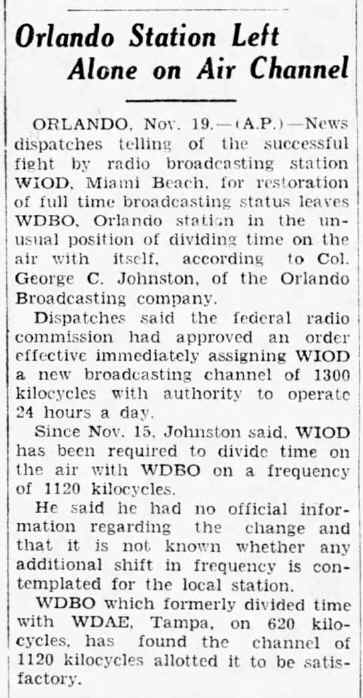 Tampa Morning Tribune 11-19-29 |
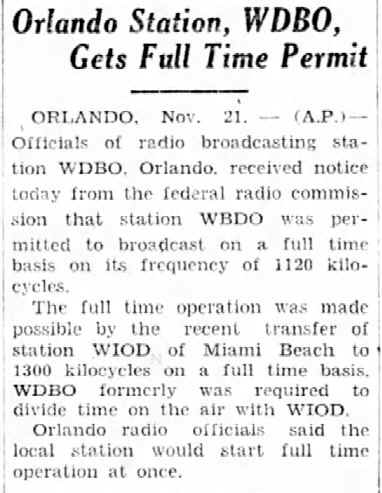 Nov
21, 1929 Nov
21, 1929WDBO receives full me authorization from the FCC that the station was permitted to broadcast on a full time basis on 1120 kilocycles. Tampa Morning Tribune 11-21-29 |
||
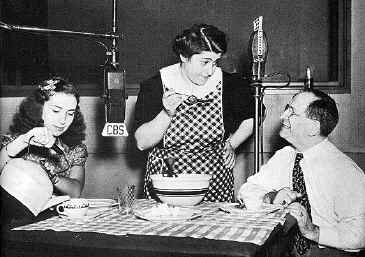
| 1930-In March, the station became a part-time affiliate of the CBS Radio Network, which brought national advertising to the new chain of five CBS South Atlantic stations. | |||
| 1931-WDBO became a full-time CBS Radio Network affiliate in June. | |||
| 1936-WDBO's transmitter is moved to Dubsdread Country Club. | |||
| 1937-WDBO is authorized to operate at an output power of 5,000-watts daytime | |||
|
Wings Over Jordan |
|||
|
|
|
||
 |
 |
|
|
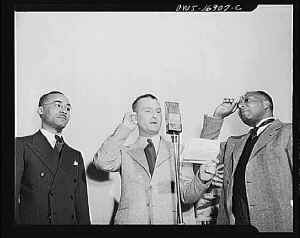
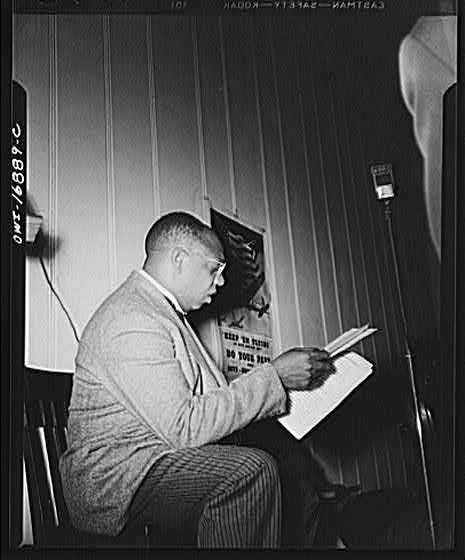
| In the 1930s and 1940 the Accapella sound of Cleveland's famed black choir captivated the nation. The popular Sunday morning radio program was broadcast by Columbia Broadcasting System from WDBO in 1943. Hoping to spread Christianity through Negro spirituals, the Rev. Glenn T. Settle launched the choir in 1935 from the sanctuary of Cleveland's Gethsemane Baptist Church. The choir drew the praise of mixed-race audiences with traditional spirituals and original works. For nearly a decade, America listened to the Wings Over Jordan choir, the first black singing group with a national radio audience. CBS began airing the "Negro Hour" in 1938 from the Cleveland studios of WGAR in Cleveland. The weekly program was later renamed "Wings Over Jordan." Besides presenting music, it featured sermons and black artists and scholars who offered ideas not heard on national radio. | |||
|
Remodel Rooms |
|
| 1940-WDBO is authorized to operate at a power output of 5,000-watts full time, with a directional antenna at night. | |
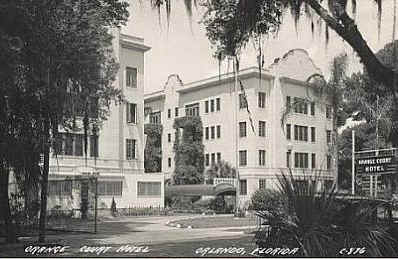 1944-The Great Atlantic Hurricane of 1944 destroyed the roof of the WDBO studios, in the Angebilt Hotel in downtown Orlando. WDBO's north tower in Dubsdread blew down. WDBO set up temporary studios in Orlando's Orange Court Hotel. |
|
|
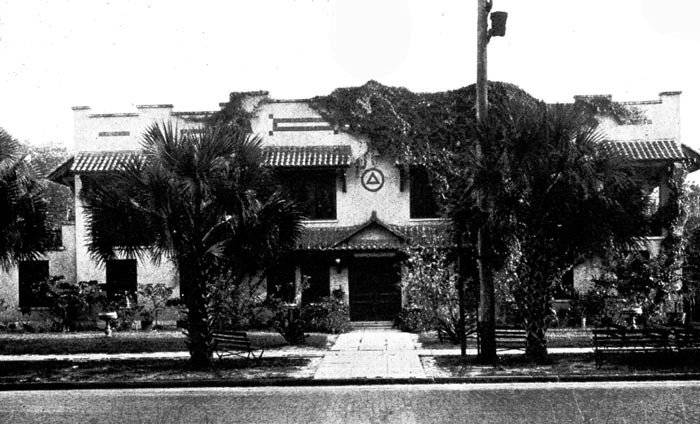
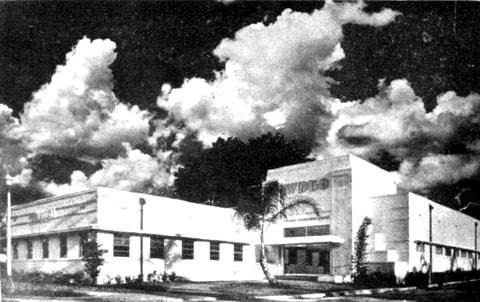
1947-WDBO moves in
to its studios to 30 South Ivanhoe Boulevard
on the shores of Lake Ivanhoe. |
|
|
|
|
|
|
|
|

|
|
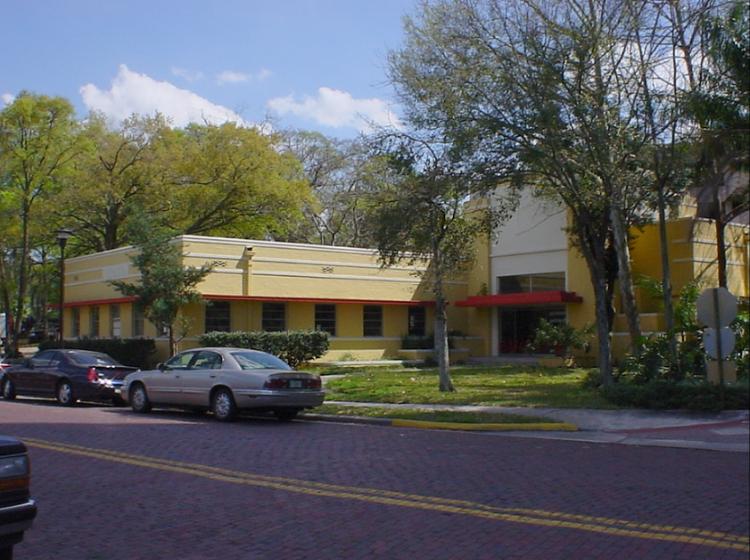
WDBO Ivanhoe studios-courtesy of Dennis Snyder |
|
Click photos for full sized view |
|
|
|
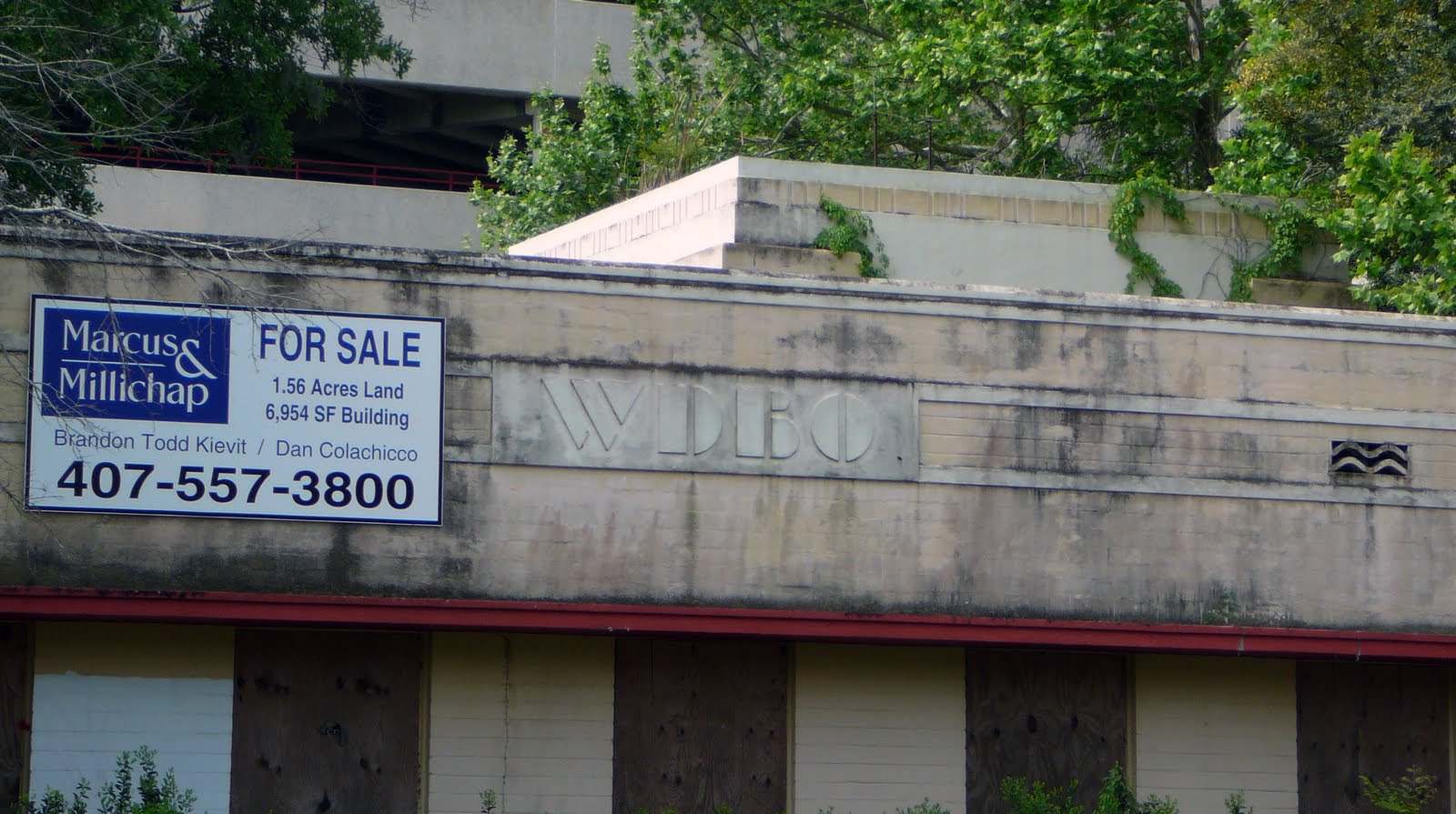
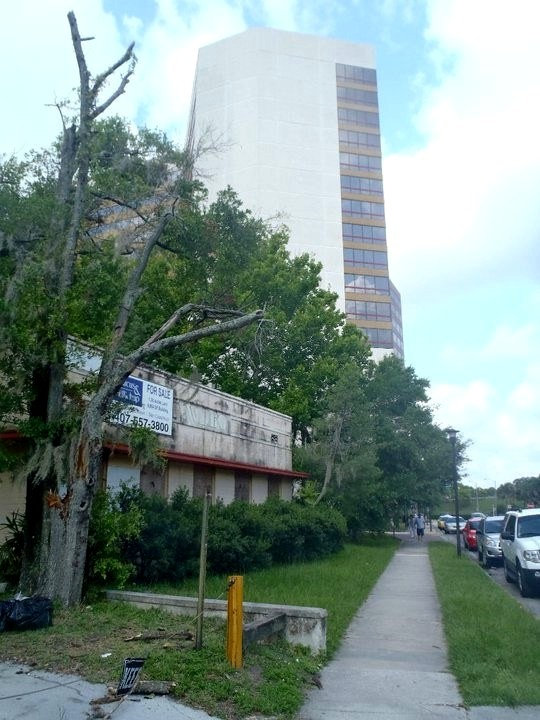
The building was rented by a number of people from 1986 on, with its last tenant being Strollo Architects, Inc. The building is now in its beginning stages of disrepair, and has closed it's doors. The future of the building has been determined as being torn down and replaced with a twin tower 34-story condominium complex and 37-story condominium complex with retail and restaurants called Orlando Palace. |
|
|
|
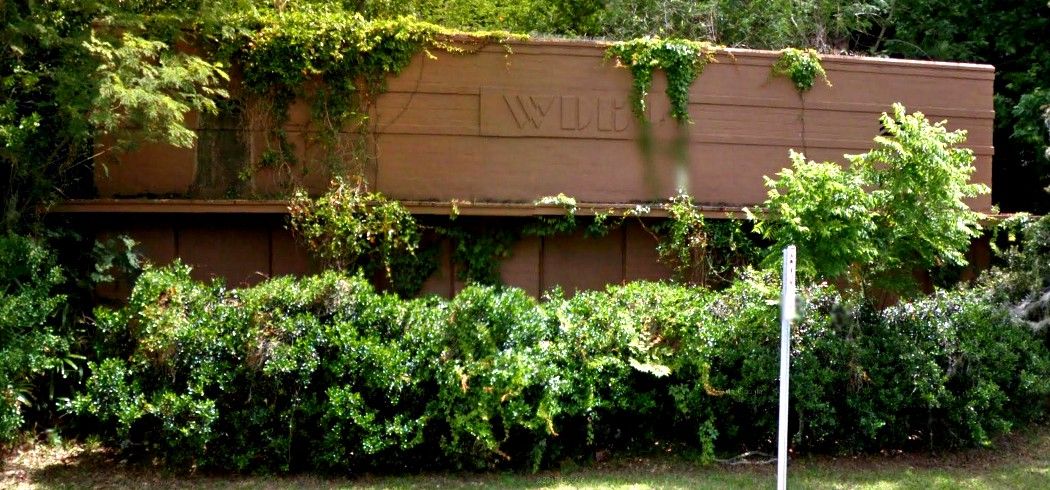
The WDBO studio
building is still standing as of May 2015. This image from Google maps. |
|
|
|
|
|
1991-The Gulf War creates a demand for talk radio. WDBO picks up the Rush Limbaugh Show. Music is completely phased out and other shows, including Bruce Williams, Sally Jesse Raphael and Larry King are phased in. |
1983-WDBO
becomes an affiliate of the ABC Radio
Network

|
|
WDBO
Comes Home 6-24-20 WDBO-FM 96.5 is moving back to its former frequency at 580 AM. WDBO began simulcasting on 580 AM, 96.5 FM HD2, and 107.3 this afternoon. The 96.5 frequency will become the home of Spanish Hot AC as Éxitos 96.5 FM on Monday 6-29. The ESPN programming heard on 580 AM since 2012 will now air on WCFB-FM 94.5 HD2. |